A personalized dendritic-cell vaccine program for glioblastoma, in China
Given alongside standard surgery and chemoradiation, not instead of it. Led by Prof. Youwen He, 25 years a tenured professor of immunology at Duke, with neurosurgeons from Beijing Tiantan Hospital on the treatment team.
Authorized for clinical use in China's Beidaihe national pilot zone. Early-phase data. Fee-based. One course, about 12 to 14 weeks in China for most patients. Our multidisciplinary team reviews your records before anyone books a flight.
We reply within 1 business day. Records review report in about 1 week.
Three things to know before you read further
- This is not a clinical trial and the vaccine is not an approved drug. It is given under a Chinese national pilot framework that permits clinical use of new cell therapies with hospital oversight, and the program itself is authorized, inspected and priced on file with the zone authority (see how it is regulated). A separate Phase II trial is registered in China; this program is not enrollment in that trial.
- The evidence is early. Thirteen GBM patients across an investigator study and a Phase I trial that began in 2025, 900+ doses of safety experience across GBM and other solid tumors, and our first patient now more than 9 years without recurrence. No randomized trial has been completed and follow-up is still short. We show you the numbers and the papers; we do not promise outcomes.
- It is fee-based and insurance does not cover it. The cell-vaccine pathway costs several hundred thousand US dollars. A lower-cost option, an off-the-shelf Survivin mRNA-LNP vaccine at roughly one-tenth the vaccine cost, is available when the MDT considers it suitable; it has completed human safety testing but has less efficacy evidence. You receive a written estimate for either route before any decision.
If you are still reading, the rest of this page explains what the treatment is, what the data show, who does it, how long it takes, and how to start.
Your own immune cells, trained against your own tumor
Glioblastoma almost always returns after surgery, radiation and temozolomide because microscopic tumor cells remain. The goal of this treatment is to teach your immune system to recognize and attack those remaining cells.
Dendritic cells are the immune system's instructors: they show T cells what to hunt. This program takes your own dendritic cells, loads them with the targets found in your own tumor, and returns them so your T cells learn to recognize residual tumor.
What it is combined with. Depending on the MDT plan, the vaccine may be combined with anti-PD-1 antibody, poly I:C, low-dose cyclophosphamide and other agents that help the immune response. Standard surgery, radiotherapy and temozolomide continue as medically indicated.
What it is not. It does not replace surgery, radiation or chemotherapy. It is not a cure. It is an addition to standard care, intended to lower the chance and delay the timing of recurrence.
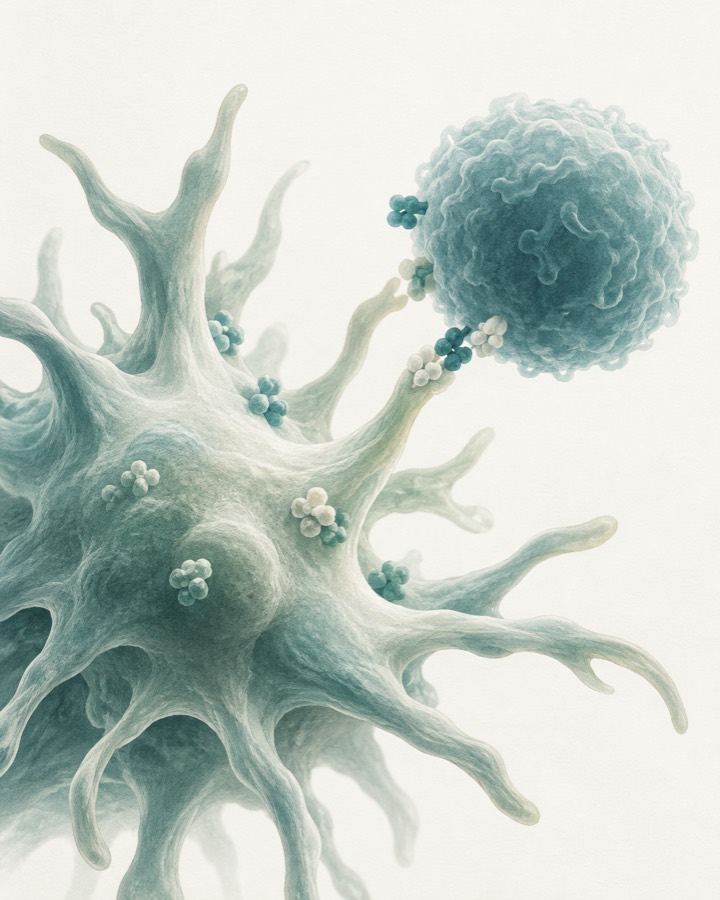
Whole-exome and RNA sequencing of your tumor tissue identifies the targets specific to your cancer. Our AI-assisted design pipeline selects and encodes them as mRNA.
Collected from your blood by leukapheresis, a procedure similar to blood donation that takes a few hours.
In a GMP facility your cells are loaded with the mRNA, using the team's triVac antigen modification (about 15-fold higher T-cell responses in patient samples versus unmodified mRNA-DC). The loaded cells are given back as a course of three doses about two weeks apart. Most patients need one course.
Cell-based or in-body delivery
The same tumor-target design can be delivered two ways. The MDT recommends one in your assessment report; the choice is yours after that conversation.
Personalized mRNA-DC cell vaccine
Your dendritic cells are collected, loaded with mRNA for your tumor's targets in a GMP facility, and returned as a course of three doses about two weeks apart. Most patients need one course.
- Phase I and investigator-study data below; 900+ doses given
- Targets chosen from your own tumor's sequencing
- Requires leukapheresis and about 4 weeks of manufacturing
- The main cost of the program
Survivin mRNA-LNP vaccine
An off-the-shelf mRNA vaccine against Survivin, a target present in over 90% of GBM, carried by the company's lipid nanoparticle directly to immune cells inside the body. No cell collection, no manufacturing wait.
- Roughly one-tenth the cost of the cell vaccine
- Authorized under the same pilot framework; human safety testing completed
- Less efficacy evidence than the cell vaccine; response varies by patient
- Recommended by the MDT in writing when it fits your case or budget
Both routes are delivered at Yifang Hospital under the Beidaihe pilot framework. The MDT may also combine them.
The numbers, with their limits
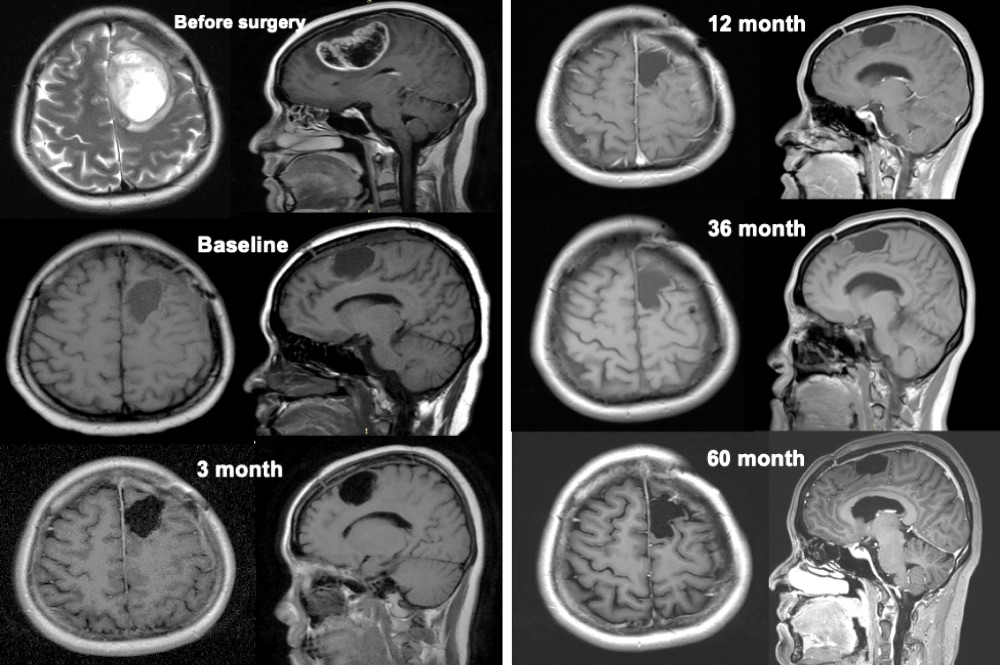
What "recurrence" means here. The months above are progression-free survival: the time until the tumor is seen growing again on MRI. They are not survival times. Median overall survival in the Phase I cohort has not been reached. Because the Phase I trial only began in 2025, the 15.4-month figure is bounded by how long patients have been followed so far; with 5 of 7 patients still recurrence-free, it is expected to lengthen as follow-up continues.
- Zhu et al. Personalized mRNA-DC vaccine combination immunotherapy in a GBM patient disease-free for 69 months. Journal of Pharmaceutical Analysis, 2023. doi:10.1016/j.jpha.2023.04.012
- Individualized combined immunotherapy regimens and survival in glioblastoma. Biomedicine & Pharmacotherapy, 2025.
- triVac antigen modification. PubMed 32767586
- Stupp et al., the standard-of-care benchmark. NEJM, 2005. doi:10.1056/NEJMoa043330
The team

Prof. Youwen He, MD, PhD
Chair, GBM multidisciplinary team · Founder and chairman, Tricision
Tenured professor of immunology at Duke University for 25 years. Over 40 years in immunology and cancer immunotherapy, 170 publications, American Cancer Society Research Scholar Award. Special expert to the US Department of Health and Human Services' National Vaccine Program on vaccine safety; NIH grant reviewer. Since 2015 he has led the clinical program in personalized immunotherapy for GBM in China.
Every case is reviewed by neurosurgery, radiation oncology, medical oncology, immunotherapy, molecular pathology, radiology and psychology. The MDT writes your assessment report and treatment calendar, and meets again whenever your condition or test results change.
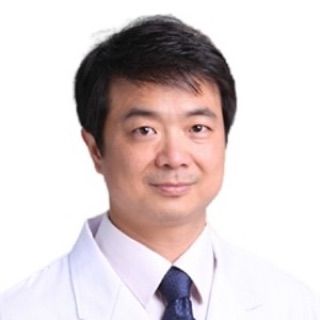
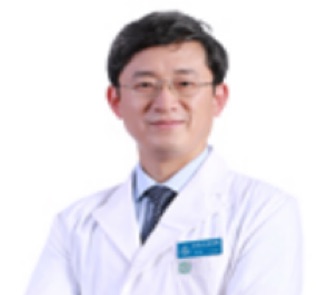
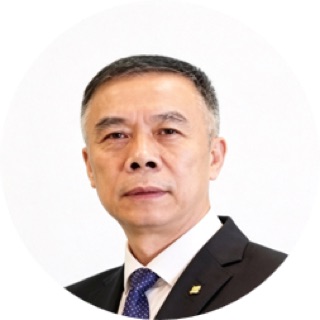
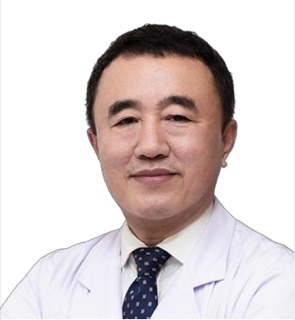


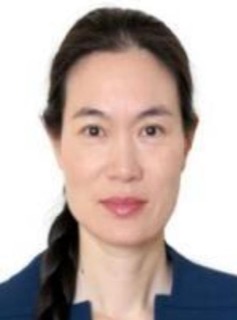
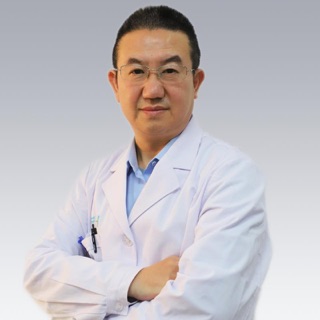
Additional specialists join the MDT as each case requires.
Hospitals
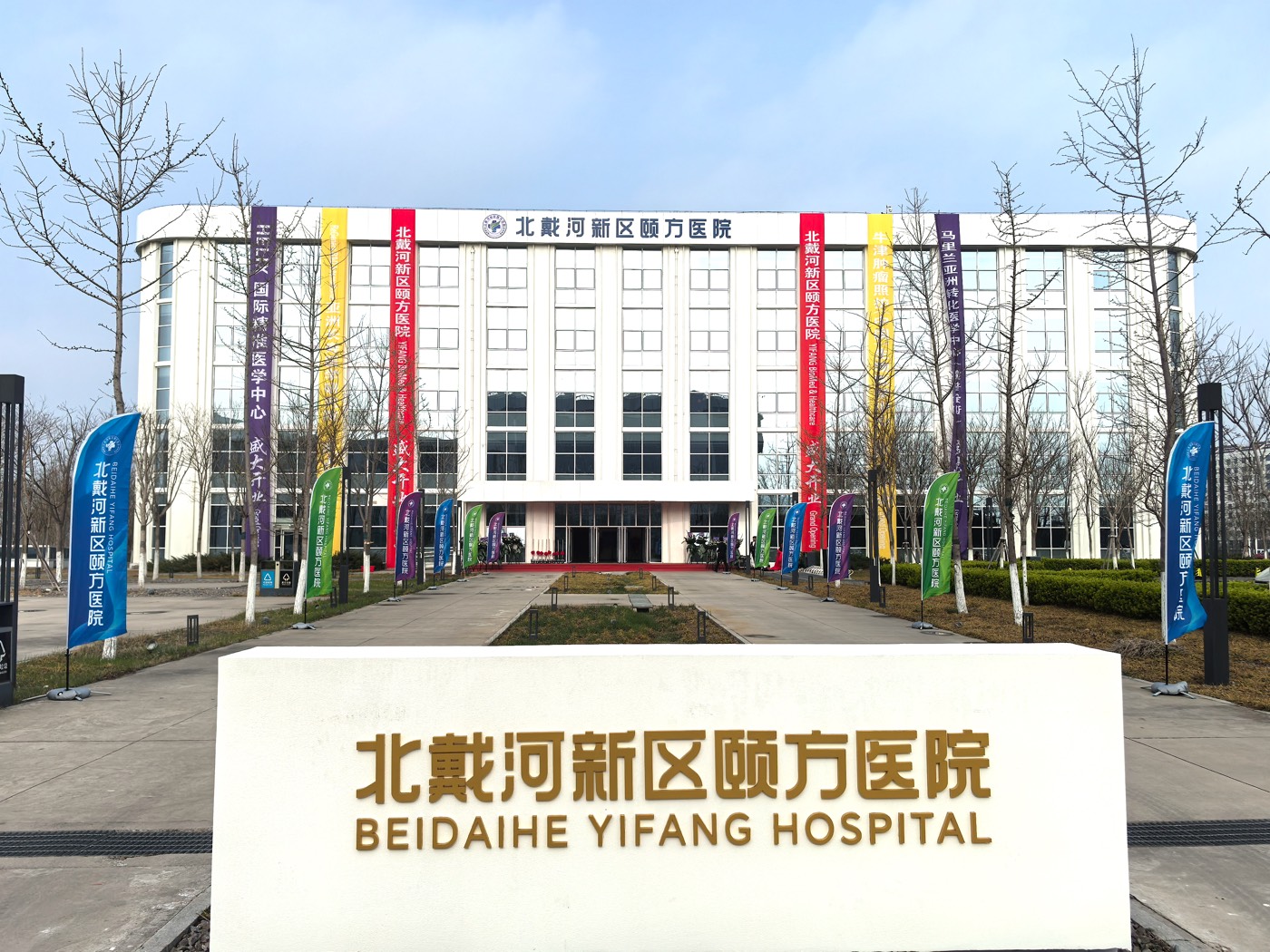
Yifang Hospital, Beidaihe
An innovation-platform hospital in the Beidaihe national pilot zone, built around cell and gene therapy with molecular diagnostics and rehabilitation on site. About 10,000 m², 100 beds in the first phase. Beidaihe is a coastal city about 3 hours by road, or under 2 hours by high-speed train, from Beijing.
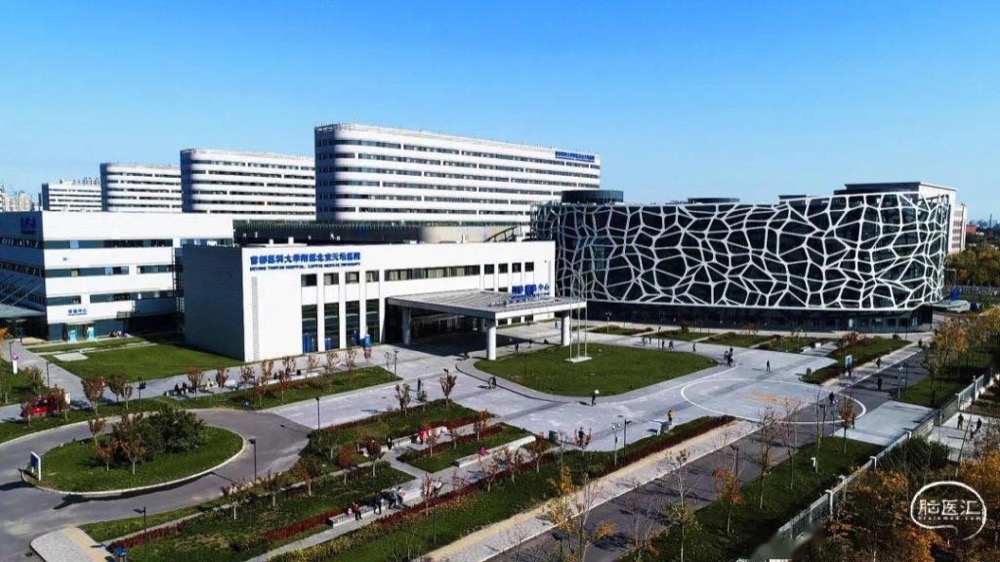
Beijing Tiantan Hospital
Ranked first in China for neurosurgery and neurology and among the world's largest neurosurgical centers by case volume: 1,650+ beds, 23,000+ neurosurgical and neuro-interventional procedures a year, a WHO Collaborating Centre for neurohealth, and an international medical center with multilingual care. Surgery, where indicated, is coordinated through the program.
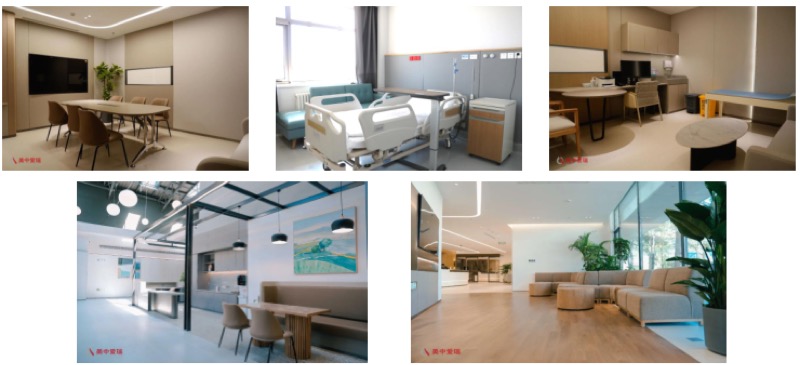
Beijing Arion Cancer Center
A tertiary specialized cancer hospital and member of the Mayo Clinic Care Network, with PET-CT, MRI and linear accelerators on site.
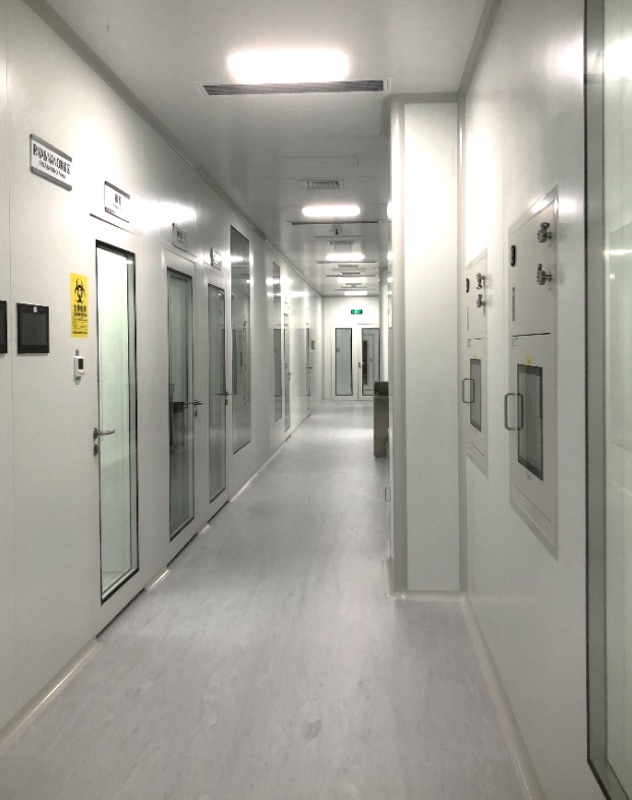
Manufacturing. Your vaccine is made in Tricision's GMP facility under hospital oversight, with batch records and quality release for every dose. The facility holds ISO 9001 certification and runs China's first GMP-grade mRNA production line.
Authorized, inspected and on file. Not improvised.
Families rightly ask whether a treatment outside a formal trial is legitimate. China regulates this route tightly, and the program sits inside that system rather than around it.
China permits clinical application of new biomedical technologies only in designated pilot zones. Beidaihe (Hebei) and Bo'ao (Hainan) are the two. Treatment outside them is not permitted.
The national regulation on biomedical technology, in force since May 1, 2026, gives this route an explicit legal basis: the technology, the hospital and the fee are each approved and recorded. This program was the first personalized mRNA-DC vaccine program authorized for glioblastoma in the zone, and was already treating patients there before the Order took effect.
The fee per course is registered with the pilot zone, not set case by case. Your written estimate is built on that filed price plus the hospital services your plan requires.
The drug-pathway version of the vaccine, tri1215, has a Phase II trial registered with China's Center for Drug Evaluation (CTR20261465). The same science is moving through formal drug approval while the pilot program treats patients now.
Made on China's first GMP-grade mRNA production line, ISO 9001 certified, with batch records and quality release for each dose, under the treating hospital's oversight.
Treatment is delivered by licensed hospitals and physicians, with written informed consent, hospital ethics oversight and medical records you take home.
Who this is for
Newly diagnosed
Before or shortly after surgery, where the full pathway (surgery if indicated, chemoradiation, vaccine) can be planned together.
Post-operative
Surgery done elsewhere; pathology, scans and treatment so far are reviewed before continuing.
Recurrent
Disease has returned or progressed; the MDT considers surgery, local or systemic treatment, and the vaccine.
Other solid tumors
Colorectal, pancreatic, breast, ovarian, cervical, thyroid, sarcoma, head and neck, neuroendocrine. The same personalized vaccine platform, on top of cancer-specific standard care. Individually assessed and quoted.
GBM is where the program has the most clinical experience. The vaccine platform has also been used across other solid tumors in investigator-initiated studies at Tiantan, Xijing, Zhuhai People's and Sanjiu hospitals, and those 900+ doses are part of the safety record above. For non-GBM cancers the MDT builds the plan around that cancer's standard treatment and tells you honestly how much evidence exists for your tumor type.
What the MDT looks at: performance status (how the patient is doing day to day), organ function, pathology including IDH and MGMT status, prior treatments and their timing, and recent imaging.
Some patients are declined. If the MDT does not believe the treatment can help, it will say so in writing. We would rather lose a case than take a family across the world for nothing.
- Daily function. The Phase I trial required a Karnofsky score above 70, meaning the patient can care for themselves with at most occasional help. Bedbound patients are rarely suitable.
- Tumor tissue. Sequencing needs tissue from surgery or biopsy. If surgery was done at home, your pathology lab can usually ship a block; we tell you how.
- Time. Plan for 12 to 14 weeks in China, with a companion for most of it.
- Organ function. Recent blood counts, liver and kidney results within normal or near-normal range.
- Budget. Several hundred thousand US dollars for the cell-vaccine pathway, or roughly one-tenth of the vaccine cost for the LNP option, plus travel and living costs. No insurance reimbursement.
If most of these fit, send the records. If several do not, write to us anyway with a short summary; a coordinator will tell you within a day whether a full review makes sense.
From first contact to going home
Records review
Remote · about 1 weekYou submit MRI reports and images, pathology with molecular results, treatment history, current medications and a note on daily function. A coordinator confirms receipt within 1 business day. The MDT issues an assessment report, a personalized treatment calendar, and a written cost estimate.
Decision and travel
Nothing booked before you have the reportIf the MDT accepts the case and you decide to proceed, we issue the medical visa invitation, book hospital admission and plan transfers and accommodation.
Arrival and assessment
Week 1Airport pickup, transfer to Beijing or Beidaihe, in-person MDT consultation, baseline tests and imaging.
Surgery, if indicated
About 1 weekCoordinated with neurosurgeons from Beijing Tiantan Hospital. Patients who have already had surgery do not routinely repeat it.
Tumor sequencing and cell collection
About 2 to 3 weeks, overlappingWhole-exome and RNA sequencing, antigen analysis and mRNA design. Leukapheresis to collect your dendritic cells.
Vaccine manufacturing while chemoradiation runs
About 4 weeks · chemoradiation about 6 weeksStandard radiotherapy and temozolomide proceed on schedule. Your vaccine is manufactured and quality-released in parallel.
Vaccine course and monitoring
About 4 to 8 weeksThree doses about two weeks apart, with immune monitoring, imaging and MDT review. Combination agents per the treatment calendar. T-cell response is measured about two months after the course.
Home, with follow-up
First yearDischarge summary, medication plan, and a written follow-up schedule. Remote consultations, imaging review and rehabilitation guidance, coordinated with your doctors at home.
Stages overlap; the MDT confirms your actual stay. A second course is uncommon and would be discussed separately.
What it costs
The medical pathway is several hundred thousand US dollars.
The exact figure depends on your category, whether surgery is needed, and what the MDT plans. You receive the written estimate with the MDT report, before any decision or payment for treatment. The estimate can change if additional tests, hospital days or procedures become necessary; we tell you before, not after.
- Included
- Records review and MDT consultation, molecular pathology and sequencing, antigen analysis and mRNA design, vaccine manufacturing and administration, hospital care including surgery and chemoradiation where indicated, in-China follow-up and first-year remote follow-up.
- Not included
- Flights, accommodation, meals, interpreting beyond the medical sessions, and family support. Available as optional support packages or arranged on your own.
- Insurance
- Does not cover this program. It is not an approved therapy in any country. Fees are for services delivered, not for outcomes.
- LNP option
- Roughly one-tenth the cost of the cell-vaccine pathway for the vaccine component; hospital care, sequencing and surgery are priced the same.
- Payment
- Invoiced in US dollars by bank transfer. Hospital charges are itemized. No fee is due until you have accepted the written estimate.
- If plans change
- Cancellation and refund terms are set out in the service agreement you receive with the estimate.
Treatment is the hospital's job. Everything around it is ours.
- Medical interpreting in English and Arabic for every consultation, procedure and medication briefing. Russian on request
- A named coordinator who manages appointments, records, hospital liaison and your family's questions from first contact to return home.
- Medical visa invitation and travel planning.
- Airport pickup, Beijing–Beidaihe transfers and a vehicle with driver during your stay.
- Accommodation for the patient and accompanying family, from four-star to luxury hotels, near the hospital.
- Halal meals, prayer arrangements and Ramadan scheduling coordinated with hospital and hotel.
- Inpatient caregiver arrangements according to the patient's needs.
- After you return home, remote coordination of follow-up, imaging review and communication with your home doctors for 90 or 180 days depending on the package.
Support packages for 30 days of on-site services are offered at three levels. Prices and inclusions are provided with your estimate.
Getting here, staying safe, staying in touch
Travel and visa
Fly into Beijing Capital or Daxing airport. We issue the medical visa invitation letter for the patient and companions; most nationalities obtain a medical (M or S2) visa within 1 to 2 weeks. A coordinator meets you at the airport. Beidaihe is under 2 hours from Beijing by high-speed train, and we handle the transfer.
During your stay
A coordinator is reachable 24 hours a day by phone and email. Yifang Hospital provides inpatient care, and Beijing Tiantan and Arion are available for neurosurgical or oncology emergencies. One family member can usually stay in the room. Halal meals, prayer space and Ramadan scheduling are arranged on request.
Your records
Reports are written in Chinese and English. You leave with the MDT reports, imaging, pathology, treatment summary and the vaccine batch record, so your home oncologist has everything. We can speak with your home doctor directly, with your consent.
For referring physicians
Physicians can submit a case on a patient's behalf. You receive the MDT report, can join the MDT consultation remotely, and remain the treating physician at home before and after the stay. Write to ryanzhang@tricisionbio.com.
Frequently asked questions
Is this a clinical trial?
No. It is a fee-based treatment program under a Chinese national pilot framework for new biomedical technologies. A separate Phase II trial is registered in China; this program is not enrollment in that trial.
Do you treat cancers other than glioblastoma?
Yes. The same personalized mRNA-DC vaccine platform is used for colorectal, pancreatic, breast, ovarian, cervical and thyroid cancers, sarcoma, head and neck cancers and neuroendocrine tumors, on top of that cancer's standard treatment. GBM has the most clinical data; for other tumors the MDT reviews your case and tells you how much evidence exists for your type. Costs are quoted individually.
Is the vaccine approved?
No. It is not an approved drug in China, the US, Europe or elsewhere. It is given with hospital oversight under the pilot-zone framework, with GMP manufacturing and quality release for every dose.
How is this different from other dendritic-cell vaccines, such as DCVax-L or clinics in Germany?
Several groups make DC vaccines for GBM, and we encourage you to compare. The differences here: antigens selected from sequencing of your own tumor and encoded as mRNA (not tumor lysate); the triVac antigen modification; integration with surgery, chemoradiation and combination agents under one MDT; and the involvement of Tiantan neurosurgeons. We have not run a comparison against other vaccines and do not claim superiority.
What do the "15.4 months" and "6.9 months" actually measure?
The time until the tumor is seen growing again on an MRI scan, called progression-free survival. They are not how long patients live. In the Stupp study, half of patients had visible regrowth by 6.9 months; in our Phase I low-dose cohort, the midpoint was 15.4 months from the first vaccine dose at the current data cut. The trial began in 2025, so patients have not been followed for long yet; with most still recurrence-free, the figure is expected to grow as follow-up continues. Overall survival in that cohort has not yet reached its midpoint.
How many patients have had this, and how are they doing?
Thirteen GBM patients across the investigator study and the Phase I trial. The 7 formal Phase I patients are all alive and well as of October 2026, 5 of them with no recurrence. Two of the 13 are past 9 years: the first patient ever treated, whose case is published, and one other from the early group. These are company-reported figures from a small group and will be updated.
Will I need more than one course?
One course is three doses about two weeks apart, and most patients need only one. The MDT would discuss a second course only if your follow-up suggests it.
What are the risks?
Surgery, radiation and chemotherapy carry their usual risks, which your MDT report will explain. Leukapheresis can cause temporary low calcium, dizziness or bruising. For the vaccine itself, no grade 3 or higher adverse events have been reported to date; injection-site reactions, fatigue and flu-like symptoms are the expected kind. Immune-related side effects are possible when anti-PD-1 is used.
Can it fail?
Yes. The vaccine can fail to control the tumor, and recurrence can happen during or after treatment. The MDT will tell you what it sees at each scan.
Can I do the vaccine without the standard treatment?
The program is designed around standard care. If you have already completed chemoradiation, the vaccine can be added afterwards (the post-operative pathway). The MDT will not recommend skipping surgery or radiation where they are indicated.
I have already had surgery and radiation at home. Can I still come?
Yes, that is the post-operative pathway. We need the tumor tissue (or arrange for it to be shipped from your pathology lab) for sequencing, or in some cases a new biopsy.
How fast can we start?
Records review takes about a week. Travel can usually be arranged within 2 to 3 weeks after acceptance, subject to visa and hospital capacity. Tell us if the clinical situation is urgent; recurrent cases are prioritized.
Can my family come?
Yes. Accommodation, meals and transfers for accompanying family are arranged through the support package. One family member can usually stay with the patient in hospital.
What languages do you work in?
English, Arabic and Chinese for medical interpreting and daily coordination. Russian on request
What happens after I go home?
You leave with a discharge summary, medication plan and follow-up schedule. We coordinate remote consultations, imaging review and communication with your home oncologist through the first year.
Who owns my data?
Your records are used only for the MDT review and treatment. Sequencing data is stored securely and not shared outside the treating team without your consent.
Request a records review
Tell us about the patient. A coordinator confirms receipt within 1 business day; the MDT report follows in about a week.
What to have ready: the most recent MRI report and images, the pathology report with IDH and MGMT results, a summary of treatment so far, and the current medication list.
Talk to a coordinator
Languages
English, Arabic, Chinese and Russian. Replies within 1 business day; same day for urgent cases.
ryanzhang@tricisionbio.com · attach reports directly, or use the form above for large imaging files.
Hours
Beijing time (UTC+8), Monday to Saturday 9:00–18:00. Out-of-hours messages are answered the next working morning; patients in China have a 24-hour line.
Office
Tricision Biotherapeutics Inc., Beijing. Treatment at Beidaihe Yifang Hospital, Qinhuangdao, Hebei.
Tricision Biotherapeutics was founded in Beijing in 2015 by Prof. Youwen He to bring personalized mRNA and dendritic-cell immunotherapy to patients. The company runs China's first GMP-grade mRNA production line, holds ISO 9001 certification, and has given more than 900 clinical doses across GBM and other solid tumors in investigator-initiated studies at hospitals including Beijing Tiantan, Xijing, Zhuhai People's and Sanjiu. Its Survivin-targeted GBM vaccine, tri1215, has a registered Phase II trial in China.